We strive to enhance resource efficiency and facilitate the transition to a circular economy. Our goal is to reduce environmental footprints throughout our entire product lifecycle while emphasizing waste recycling and upcycling at our business locations.
Expanding the Remanufacturing Business
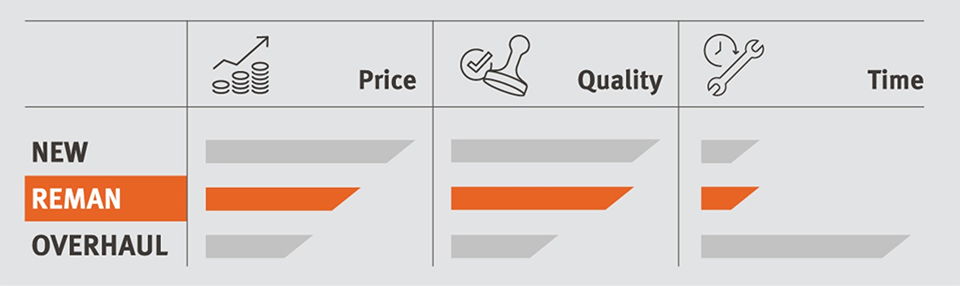
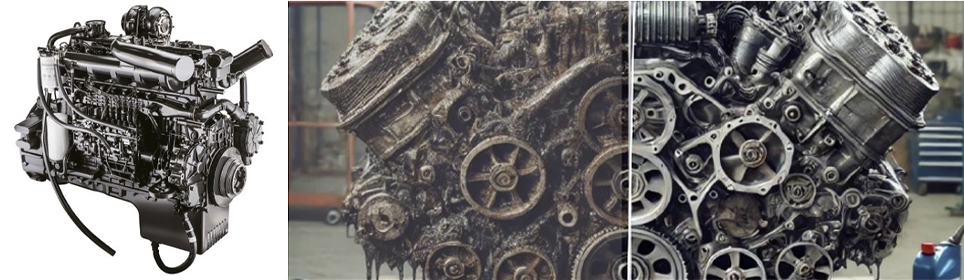
Leveraging our global network of 21 parts distribution centers, we operate an aftermarket (AM) business centered around the entire product lifecycle, simultaneously maximizing resource efficiency and customer value. By establishing a robust remanufacturing system for core components, we are expanding parts reuse through systematic recovery, maintenance, and performance restoration. Furthermore, our overseas subsidiaries are actively driving remanufacturing, reselling, and the redistribution of used equipment.
Through this circular aftermarket model, we extend product lifespans and enhance resource circulation, resulting in steady annual revenue growth within our engine remanufacturing sector. Moving forward, we plan to scale up our regional remanufacturing initiatives and strengthen collaboration with our production partners. In doing so, we will expand our resource circulation activities and actively contribute to the global transition toward a circular economy.
Waste Reduction and Recycling Expansion
Various types of waste generated from our production and office activities are classified into either general or designated hazardous waste, then outsourced to specialized vendors for lawful disposal. To improve recycling rates for plastics, cans, bottles, and wastepaper, we have placed dedicated bins near our work areas for easier access. By selling these materials to specialized collectors, we minimize total waste and increase recycling volumes.
Any non-recyclable waste is lawfully processed through certified vendors. To minimize incineration and landfill use, we prioritize working with outsourced recyclers, taking every precaution to prevent environmental pollution from our workplace operations. Additionally, to cut down on waste at the source, we collaborate with our suppliers to simplify their product delivery packaging.
Income from selling these recyclable materials is used to support local communities, such as helping underprivileged neighbors. For example, in 2022, we donated KRW 10 million earned from wastepaper recycling to ChildFund Korea.
In 2025, our Ulsan plant established and executed targeted reduction strategies for each type of manufacturing waste. Through this initiative, we successfully reduced waste generation per production unit by 5% (168 kg/unit) compared to the previous year.
Key Waste Reduction Strategies
Zero Waste to Landfill Certification
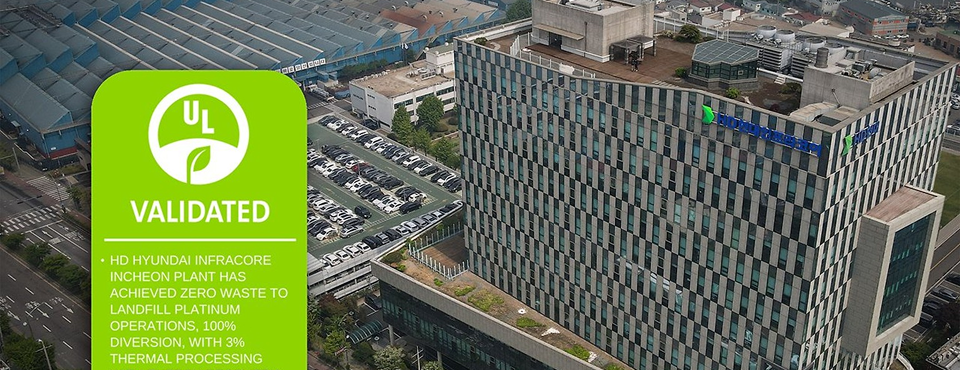
We actively manage waste across all our facilities to minimize landfill contributions and maximize recycling efforts. Our progress is officially verified through the global Zero Waste to Landfill (ZWTL) certification. Notably, our Incheon plant improved from a Gold rating in 2025 to achieving the highest Platinum rating in 2026. This milestone demonstrates that the facility recycles 99.9% or more of its total waste.
We capture used foundry sand directly from the production line for reuse and send any remaining sand for external processing so it can be reintroduced into our raw material supply. Additionally, we have established strict recycling protocols for synthetic resins, scrap wood, and scrap metal.
Moving forward, we will continue to expand our recycling networks in order to reduce landfill waste as close to zero as possible.
Minimize
Packaging
Some raw and auxiliary materials delivered to the Ulsan Campus have been supplied using single-use cardboard boxes as packaging materials.
To reduce waste generation, we reviewed the replacement of single-use cardboard boxes used for packaging with reusable plastic boxes and dedicated pallets.
When plastic boxes and dedicated pallets are adopted, the boxes and pallets brought in together with the materials can be reused for subsequent deliveries.
Through the reuse of delivery boxes and pallets, waste generation and the associated burden of waste treatment can be reduced, while suppliers can also lower their packaging costs.
At the Ulsan Campus we continuously communicate with suppliers regarding delivery methods and have established and operated a resource circulation system in which packaging materials used for deliveries are collected and reused.
As a result, the proportion of suppliers that have improved their delivery methods has steadily increased, rising from 84% in 2024 to 92% in 2025.
[Process Improvement]
single-use
cardboard boxes